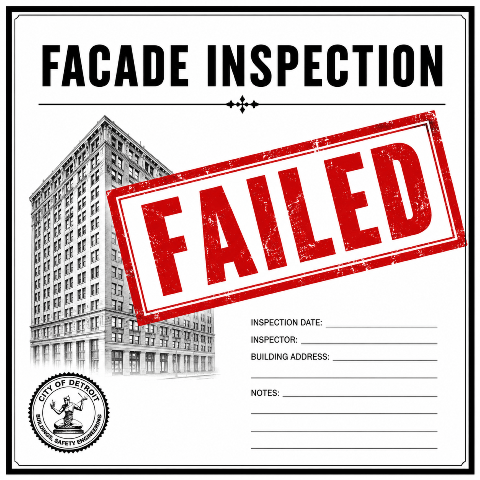
When a building in Detroit fails a facade inspection, the consequences depend on the severity of the deficiencies and whether the conditions present an immediate hazard to the public.
Immediate Safety Hazards
If the inspection identifies loose brick, unstable stone, deteriorated masonry, failing anchors, cracked parapet walls, or other conditions that could result in falling debris, the building owner may be required to take immediate corrective action. This often includes:
- Installing sidewalk canopies, barricades, or fencing to protect pedestrians.
- Removing loose or unstable materials.
- Performing emergency repairs.
- Restricting access to certain areas of the building.
Repair Requirements
The building owner is typically required to hire qualified professionals, often including a licensed professional engineer or architect, to prepare repair plans and oversee corrective work. Common repairs may include:
- Tuckpointing deteriorated mortar joints.
- Replacing damaged brick or stone.
- Repairing or rebuilding parapet walls.
- Installing masonry anchors and reinforcement.
- Repairing structural cracks.
- Replacing deteriorated lintels and shelf angles.
City Enforcement
If a building owner fails to address unsafe conditions, the City of Detroit may issue violations, citations, or orders requiring repairs. In severe cases, the city can declare portions of a building unsafe and require emergency stabilization measures.
Liability Concerns
A failed facade inspection can also increase the owner’s liability exposure. If falling masonry or facade components injure a pedestrian, tenant, or visitor, the owner may face significant legal claims. Regular inspections and timely repairs help demonstrate that the owner exercised reasonable care in maintaining the building.
Why Facade Inspections Matter in Detroit
Detroit contains many older brick, stone, and concrete buildings that are exposed to decades of freeze-thaw cycles, moisture intrusion, and weather-related deterioration. Common problems include cracked masonry, bulging walls, rusting steel lintels, and deteriorated parapets. A professional facade inspection can identify these issues before they become dangerous or require costly emergency repairs.
For this reason, building owners should not view a failed facade inspection as merely a code issue. It is an opportunity to correct developing structural and safety concerns before they threaten occupants, pedestrians, or the long-term value of the property. In many cases, early repairs are significantly less expensive than waiting until major deterioration occurs.
Common Facade Repairs on Tall Buildings
Tall buildings are exposed to decades of wind, rain, snow, temperature changes, and ultraviolet sunlight. Over time, these environmental conditions can cause significant deterioration of exterior building components. Facade inspections often identify defects that require repair to maintain structural integrity, prevent water intrusion, and protect pedestrians from falling debris.
One of the most common facade repairs is masonry restoration. Brick and stone buildings frequently experience deteriorated mortar joints due to weathering and freeze-thaw cycles. When mortar begins to crack or erode, water can penetrate the wall system and accelerate deterioration. Tuckpointing, which involves removing damaged mortar and installing new mortar, is a common repair performed on high-rise buildings. Damaged or cracked bricks may also need to be replaced to restore the strength and appearance of the facade.
Another frequent repair involves steel lintels and shelf angles. These steel components support masonry above windows and openings. Over time, moisture can cause steel to rust and expand. As the steel expands, it can crack surrounding brickwork and create bulges in the facade. Repairs often include removing masonry, replacing corroded steel components, installing corrosion protection, and rebuilding the affected wall sections.
Concrete repair is also common on tall buildings. Concrete balconies, spandrel panels, columns, and parking structures can develop cracks and spalling due to moisture intrusion and reinforcing steel corrosion. When steel reinforcement rusts, it expands and causes the surrounding concrete to break apart. Repair methods typically include removing loose concrete, treating exposed reinforcing steel, and applying specialized repair mortars or concrete restoration systems.
Parapet wall repairs are frequently required because parapets are highly exposed to weather conditions. Deteriorated coping stones, loose masonry, and inadequate flashing can allow water to enter the wall assembly. Repairs often include rebuilding unstable sections, installing new flashing systems, replacing coping stones, and improving drainage details.
Window and curtain wall systems also require periodic maintenance and repair. Failed sealants, deteriorated gaskets, and damaged glazing can allow water and air infiltration. Repairs may involve resealing joints, replacing gaskets, installing new flashing, or replacing damaged glass panels. Proper maintenance of these systems helps improve energy efficiency and reduce moisture-related damage.
Waterproofing and sealant replacement projects are among the most common facade maintenance activities. Expansion joints and control joints are designed to accommodate building movement, but the sealants eventually deteriorate due to age and weather exposure. Replacing these materials helps prevent water intrusion and extends the life of the building envelope.
In Detroit and other northern cities, freeze-thaw cycles can accelerate facade deterioration. Water enters small cracks, freezes, expands, and causes additional damage. Regular facade inspections performed by qualified engineers can identify these issues early and help building owners plan repairs before conditions become hazardous or significantly more expensive to correct. Proper facade maintenance protects occupants, preserves property value, and helps ensure the long-term safety of the building and surrounding public areas.
A professional engineering report is often necessary when significant facade defects are discovered on a building. Cracked masonry, deteriorated parapet walls, loose stone, corroded steel supports, and structural movement may require evaluation by a licensed professional engineer to determine the cause, extent, and severity of the damage. The engineering report typically documents existing conditions, identifies safety concerns, recommends repair methods, and may include drawings, specifications, and cost estimates for corrective work. In many cases, municipalities, insurance companies, lenders, and building owners rely on these reports to make informed decisions regarding repairs and public safety. An engineering report also provides a documented record that repairs were designed and reviewed by a qualified professional, helping to reduce liability and ensure that facade restoration work is performed in accordance with accepted engineering practices.
 detroitfacadeinspectors.com
Leave a comment